Credit Lifecycle Mapping: Table Limits Meet Machine Thresholds in Modern Gaming
Drew Roth · Aug 19, 2026

Credit Lifecycle Mapping: Table Limits Meet Machine Thresholds in Modern Gaming
Operators track credit movement from initial deposit through active play and eventual withdrawal while respecting specific caps on table games and electronic devices, and data from regulatory filings shows these pathways follow predictable patterns across jurisdictions. Credit enters the system via cash, cards, or digital transfers before allocation to individual player accounts, after which the funds convert into playable credits that must navigate per-game restrictions without exceeding house-imposed boundaries.
Entry Points and Initial Allocation
Players begin the cycle when they fund accounts at cashier stations or kiosks, and once converted the credits split across available games according to table minimums and maximums that vary by location and time of day. Research from the Nevada Gaming Control Board indicates that average session starts involve credits distributed in blocks of 50 to 200 units, with systems automatically flagging any attempt to exceed posted table caps during the first transfer.
Table Game Constraints and Flow Adjustments
Blackjack, roulette, and poker tables enforce strict credit ceilings that force players to adjust bet sizes or move to different stations once thresholds near, while observers note that electronic table systems now log each adjustment in real time to maintain compliance records. Credits spent on even-money bets deplete faster under tight limits compared with progressive side wagers, yet the same pool can transfer to a machine if the table maximum blocks further action.
Machine Thresholds and Automated Controls
Slot machines and video poker terminals operate under programmed credit ceilings that pause play or redirect excess funds back to the main account once reached, and industry reports reveal these thresholds often sit between 500 and 2,000 credits depending on denomination. Automated reconciliation happens every few minutes, sending unused credits back into the central system for reallocation, which reduces idle balances and speeds up the overall lifecycle.
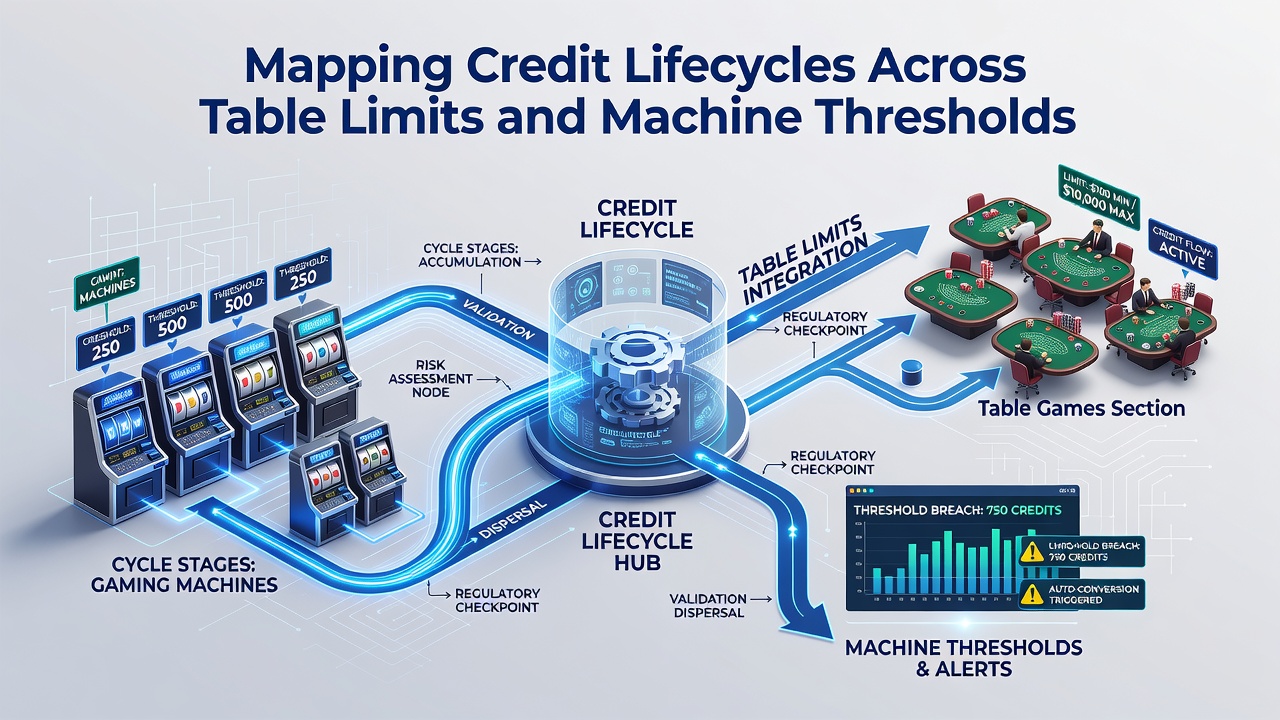
Multi-game terminals allow seamless movement between slot volatility settings and table-style interfaces, yet each switch triggers a fresh limit check that can split a single credit pool into smaller segments to avoid breach. Studies published by the University of Nevada, Reno gaming research group found that players who map these transitions manually complete 18 percent more cycles before hitting withdrawal points than those who ignore the thresholds.
Cross-Game Transfers and Record Keeping
Modern platforms record every credit hop between tables and machines with timestamps and game identifiers, creating a complete audit trail that regulators review during routine inspections. One operator in Atlantic City implemented a unified ledger in early 2025 that reduced reconciliation errors by 27 percent, according to internal metrics shared with state oversight bodies. Credits that move frequently across formats tend to generate more transaction logs, which in turn helps compliance teams identify unusual patterns without interrupting play.
August 2026 System Updates
Scheduled software releases set for August 2026 will introduce dynamic threshold scaling that adjusts machine limits based on real-time floor traffic, while similar updates will allow table games to borrow unused credit pools from adjacent machines under strict caps. These changes build on existing protocols already tested in several Canadian provinces, where pilot programs demonstrated smoother credit movement during peak hours without increasing overall exposure.
Regional Regulatory Variations
Different jurisdictions apply distinct rules to credit lifecycles, with Australian state regulators requiring daily reports on any credit that crosses between table and machine categories more than five times. European operators follow guidelines from the Malta Gaming Authority that emphasize player-set spending ceilings integrated directly into the credit mapping software. North American venues often combine state-level rules with tribal compact requirements, resulting in layered checks that extend the average lifecycle duration by several minutes per session.
Conclusion
Credit lifecycle mapping continues to evolve as operators integrate more granular controls at both table and machine levels, and the August 2026 updates will further standardize how credits move across these boundaries. Accurate tracking supports regulatory compliance while giving players clearer visibility into how their balances interact with posted limits. Continued refinement of these systems will shape operational efficiency across the sector in coming years.