Decoding the Link Between Live Dealer Pace and Bankroll Preservation Techniques
Drew Roth · Jul 1, 2026
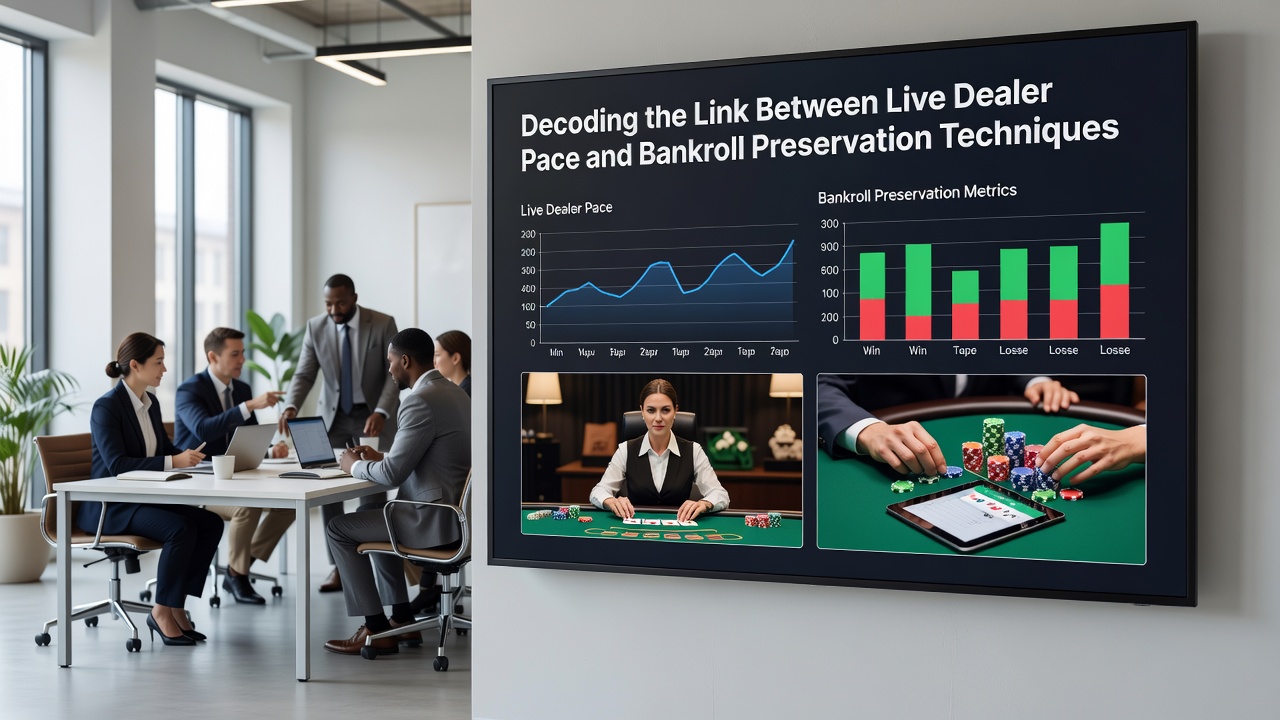
Decoding the Link Between Live Dealer Pace and Bankroll Preservation Techniques
Live dealer games operate at speeds determined by physical actions from dealers, camera transitions, and player decisions that unfold in real time, and these rhythms directly shape how quickly bankrolls face exposure during sessions. Data from multiple gaming jurisdictions shows that average roulette spins or blackjack hands complete every 45 to 90 seconds when human dealers handle cards and wheels, which creates measurable differences compared to fully automated digital versions. Observers note that faster tables in busy hours compress decision windows and force quicker bet placements, while slower periods stretch intervals and allow more deliberate pacing.
Factors Influencing Live Dealer Game Speed
Dealer experience levels, table occupancy, and platform software overlays combine to set the tempo of each round, and research from the University of Nevada Reno indicates that seasoned dealers maintain consistent intervals that reduce idle time between resolutions. Camera angles and streaming quality add another layer because high-definition feeds with multiple views introduce brief delays for transitions, whereas streamlined single-camera setups accelerate the overall flow. Players encounter these variations across different operators, and those who track session logs often discover that peak evening hours compress cycle times by up to 20 percent compared to off-peak slots.
Core Bankroll Preservation Methods
Standard approaches rely on predetermined loss limits, win goals, and bet sizing rules that scale with remaining funds, and analysts at the Australian Gambling Research Centre have documented how these frameworks help maintain session duration when applied consistently. Flat betting keeps wager amounts steady regardless of outcomes, whereas percentage-based systems adjust stakes proportionally after each result to match current capital levels. Both techniques require regular monitoring of elapsed time and completed rounds, since extended exposure at any fixed rate increases the probability of reaching preset thresholds.
How Pace Alters Preservation Outcomes
Accelerated dealer rhythms increase the number of decisions per hour and therefore multiply opportunities for both gains and losses within the same time frame, which means preservation plans must incorporate round-count caps alongside monetary ones. Slower tables extend thinking time between hands and reduce total decisions, allowing bankroll allocation strategies to stretch further before limits activate. Those who review historical data across multiple sites frequently observe that sessions at high-pace tables reach loss ceilings 30 to 40 percent sooner than identical bankrolls deployed at moderate tempos.

In July 2026 industry reports highlighted that platforms introducing variable speed controls saw measurable shifts in average session lengths when users applied pace-adjusted limits. Operators in regulated markets outside the UK reported similar patterns, with data from the Nevada Gaming Control Board showing correlations between dealer rotation schedules and player fund depletion rates across monitored properties. These findings underscore that preservation techniques gain effectiveness when calibrated to actual round frequency rather than clock time alone.
Adjusting Strategies to Match Dealer Tempo
Participants who segment their bankrolls into smaller units tied to expected round volume achieve more consistent control because they align monetary boundaries with the physical pace of each table. For example, one researcher who analyzed thousands of live sessions found that linking stop-loss triggers to a fixed number of hands rather than elapsed minutes produced longer survival rates on faster tables. Platform tools that display real-time round counters help enforce these adjusted frameworks, and users who activate them report fewer instances of exceeding intended exposure levels.
Cross-referencing dealer shift patterns with personal session histories reveals recurring tempo windows that repeat daily, which allows pre-session planning to match chosen preservation rules to anticipated speeds. When tables speed up due to high demand, reducing unit size per round while keeping the same total round cap maintains overall risk parameters without altering the underlying method.
Conclusion
The connection between live dealer pace and bankroll preservation rests on quantifiable differences in decision frequency and exposure duration that operators and players can both measure. Techniques grounded in round counts and proportional sizing adapt more readily to these variations than fixed time-based rules, and continued data collection from regulatory bodies and academic institutions continues to refine understanding of these dynamics across markets.