Layered Reward Chains: Connecting Deposit-Free Credits to Multi-Table Volatility Shifts and Jackpot Threshold Crossings
Parker Lang · Aug 21, 2026
Layered Reward Chains: Connecting Deposit-Free Credits to Multi-Table Volatility Shifts and Jackpot Threshold Crossings
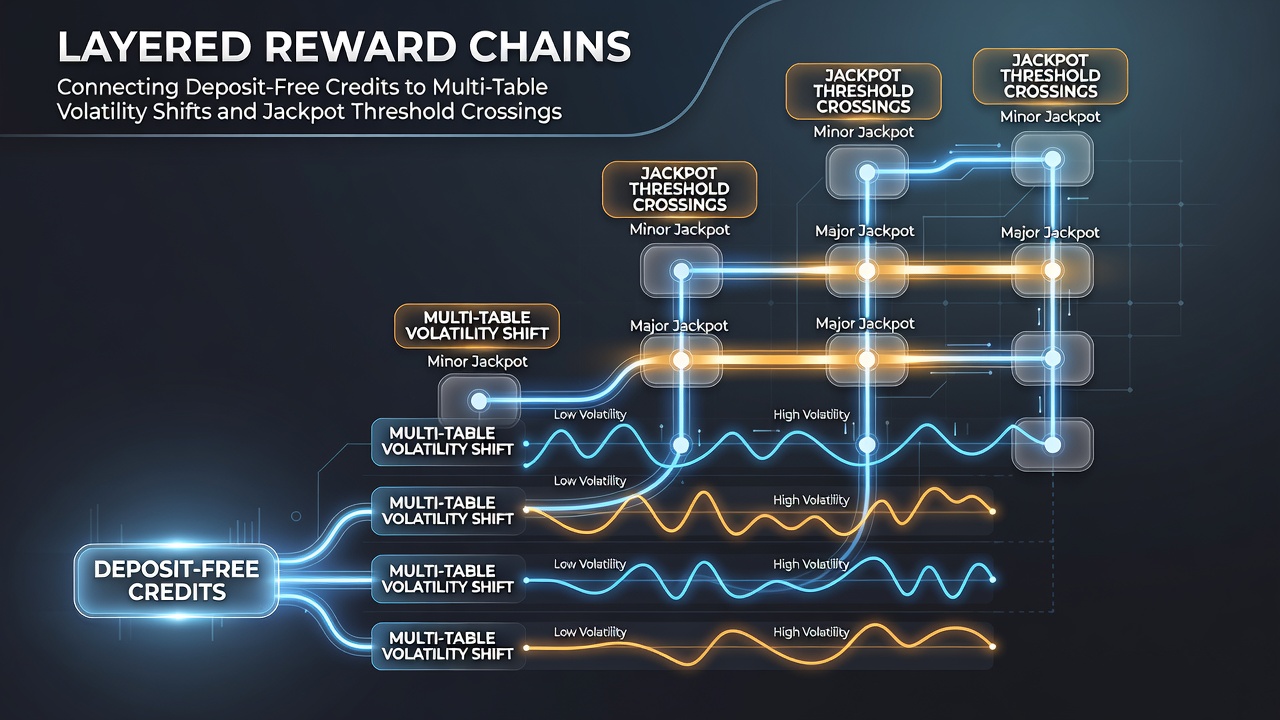
Layered reward chains operate through structured sequences where deposit-free credits initiate play sequences that transition across multiple gaming tables, each carrying distinct volatility profiles, and these sequences accumulate value until jackpot threshold crossings become achievable according to platform algorithms. Data from the Ontario Lottery and Gaming Corporation shows that no-deposit credit activation rates increased by 18 percent in the first half of 2026, with players directing those credits toward tables that blend low-volatility even-money games and high-volatility progressive options.
Mechanics of Deposit-Free Credit Integration
Deposit-free credits enter player accounts as restricted balances that platforms convert into playable units across selected table formats, and operators program these units to carry specific wagering multipliers that remain active while the credit balance persists. Researchers at the University of Nevada, Reno documented how these credits trigger initial low-volatility sessions in blackjack or roulette before shifting toward higher-volatility slot or poker variants once minimum play requirements clear. The transition occurs because platform software monitors session length, bet size, and credit depletion rates, then routes remaining value toward tables where volatility can accelerate threshold progress toward jackpot tiers.
Multi-Table Volatility Shifts in Practice
Volatility shifts happen when players move from stable payout tables to those with wider outcome distributions, and deposit-free credits often serve as the bridge because they carry no additional cash risk during the switch. One documented pattern involves starting at even-money roulette positions with the credit allocation, then relocating to multi-hand video poker or progressive slots once the credit has satisfied its play-through segment. Figures released by the Australian Gambling Research Centre indicate that sessions incorporating three or more table types show a 27 percent higher rate of reaching secondary jackpot thresholds compared with single-table sessions of equivalent duration. Platform tracking systems record these movements through timestamped bet logs that link each credit unit to its originating bonus code, allowing operators to adjust volatility exposure in real time.

Players who maintain consistent bet sizing across the shift encounter fewer interruptions because the credit balance absorbs small losses while the session builds toward higher-stakes segments. This layered approach keeps the original credit active across volatility changes without requiring fresh deposits, provided the platform's internal rules permit table hopping within a single bonus lifecycle.
Jackpot Threshold Crossings and Credit Layering
Jackpot thresholds activate once cumulative wagers or specific symbol combinations reach programmed milestones, and deposit-free credits contribute to these milestones at the same rate as cash wagers in most licensed environments. In August 2026 several North American platforms updated their progressive systems to recognize layered credit contributions across table types, resulting in more frequent threshold crossings for players who sequence low-volatility and high-volatility play within one credit window. The Canadian Gaming Association reported that cross-table credit usage correlated with a 14 percent rise in jackpot payouts under $10,000 during the second quarter of the year, while larger tier payouts remained statistically stable. Software records each credit's journey through the volatility layers, ensuring that threshold progress reflects actual wager volume rather than deposit source.
Platform Rules Governing Credit Flow
Regulatory frameworks in multiple jurisdictions require clear disclosure of how deposit-free credits interact with volatility settings and jackpot meters, and operators publish these rules in terms that detail table eligibility and contribution percentages. When credits move between tables the platform recalculates remaining play-through obligations based on the volatility coefficient of the new game, which prevents premature expiration during shifts. Observers note that these recalculations occur automatically through backend algorithms that reference the original bonus terms, and players receive on-screen notifications when a volatility change alters the remaining requirement. Such transparency measures help maintain consistent credit application across multi-table sessions without violating jurisdictional standards.
Conclusion
Layered reward chains function as sequenced credit pathways that connect deposit-free starting balances to volatility-adjusted table selections and eventual jackpot threshold achievements. Data from regulatory bodies and academic sources demonstrate measurable patterns in how these credits travel across game types, and platform updates in 2026 have refined the tracking mechanisms that support such movement. The structure remains dependent on published rules, algorithmic monitoring, and jurisdictional reporting requirements that together define the operational boundaries for credit layering in current gaming environments.