Promotional Credit Deployment in Sequential Casino Game Transitions
Tina Flores · Aug 23, 2026
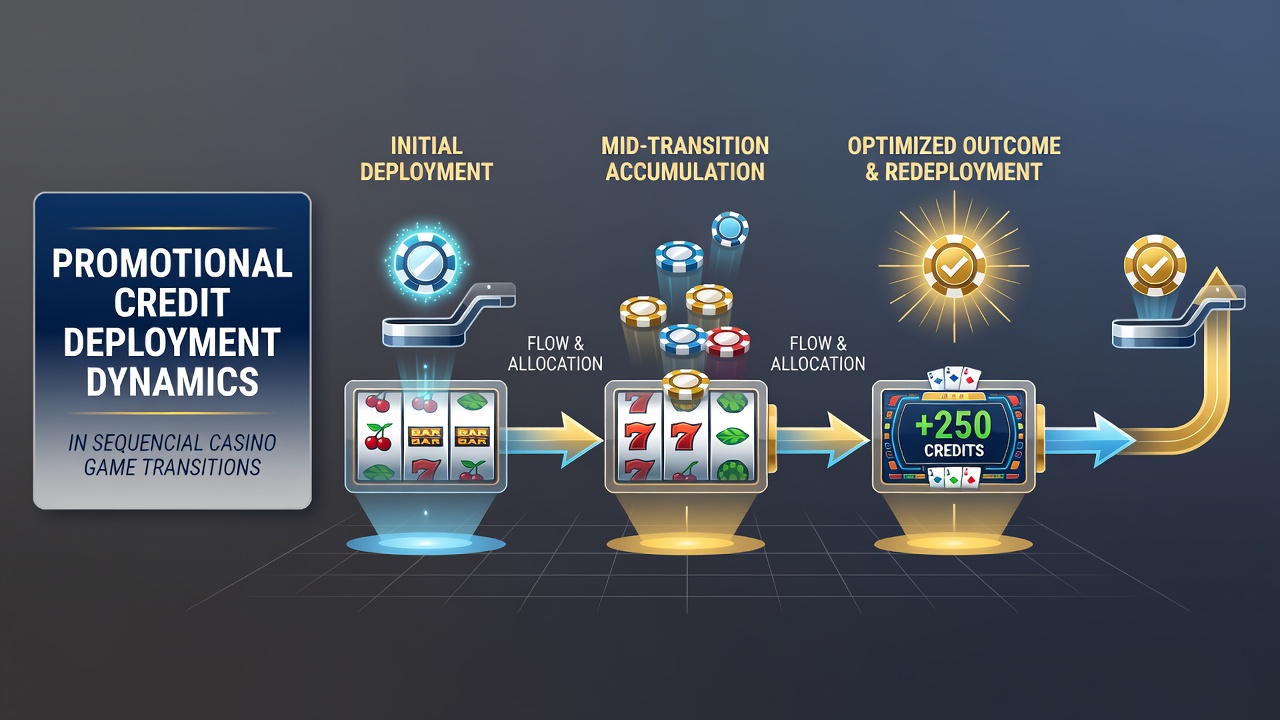
Promotional Credit Deployment in Sequential Casino Game Transitions
Promotional credits function as operator-issued incentives that players activate within digital casino platforms, and their deployment shifts when users move between game categories in a single session. Systems track these credits through player accounts where wagering requirements attach to specific contributions from slots, table games, and live dealer formats. Data from industry tracking shows that sequential transitions often trigger recalculations because each game category carries distinct contribution percentages toward bonus clearance.
Core Mechanics of Credit Allocation
Operators configure promotional credits with game-specific weighting so that a slot spin might contribute 100 percent toward requirements while a roulette bet contributes only 20 percent. When players transition from one title to another, backend algorithms adjust remaining credit balances accordingly, and this process occurs in real time through integration with game servers. Research from the American Gaming Association indicates that such weighting prevents rapid clearance on low-house-edge games while still encouraging extended play across portfolios.
Sequential transitions also involve session timers that reset or extend based on credit activity. A player who exhausts free spins on a video slot and then enters a blackjack table sees the remaining promotional balance recalibrated against blackjack's lower contribution rate. Observers note that these adjustments maintain operator margins because the credit value effectively shrinks when moved into games with slower wagering throughput.
Player Behavior Patterns in Multi-Game Sequences
Tracking data reveals that users frequently begin sessions with high-volatility slots to generate quick credit multipliers before shifting into even-money table games for steadier progress. This pattern appears in platform logs where initial credit deployment occurs on slots, followed by transfers to roulette or blackjack once certain win thresholds activate. The transition point often coincides with bonus feature completions that unlock additional credit tiers.

Those who study session data find that players who chain credits across three or more game types tend to extend overall playtime by an average of 18 minutes compared with single-game sessions. The extension occurs because each transition refreshes the perceived value of remaining credits through new game mechanics. Platform reports from operators in regulated markets show similar patterns emerging in August 2026 after several jurisdictions updated their bonus disclosure rules.
Technical Infrastructure Supporting Transitions
Modern casino management systems rely on unified ledgers that record every credit movement across game engines. When a player exits a slot machine mid-feature and loads a poker client, the ledger updates contribution tallies and applies any pending multipliers before the new game initializes. This infrastructure reduces disputes because every transition carries an auditable timestamp and game identifier.
Integration with third-party game providers requires standardized APIs that communicate remaining wagering needs. A transition from progressive slots to live dealer blackjack, for instance, triggers an API call that returns the adjusted credit amount and any game-specific restrictions. Those who've examined compliance documentation note that these calls must complete within milliseconds to avoid interrupting player flow.
Regulatory Considerations Across Jurisdictions
Regulators in multiple regions require transparent display of contribution rates before players initiate transitions. In markets overseen by bodies such as the Nevada Gaming Control Board, operators must publish tables listing exact percentages for each game category. Similar requirements appear in Australian state frameworks where promotional credit terms must remain accessible throughout a session.
Academic studies from institutions including the University of Nevada, Reno have examined how sequential credit deployment affects player retention metrics. Findings indicate that clearer transition rules correlate with higher completion rates of wagering requirements across multi-game sessions. These studies draw on anonymized platform data collected over multi-month periods and control for variables such as deposit size and game volatility.
Conclusion
Promotional credit deployment across sequential casino game transitions operates through weighted contribution systems, real-time ledger updates, and regulatory disclosure mandates. Platform infrastructure supports these movements while maintaining compliance across different jurisdictions. Data from industry associations and academic sources continues to document how players navigate these mechanics during extended sessions.