Sequencing Wagering Activities for Optimal Promotional Longevity in Gaming Venues
Drew Roth · Jun 5, 2026
Sequencing Wagering Activities for Optimal Promotional Longevity in Gaming Venues
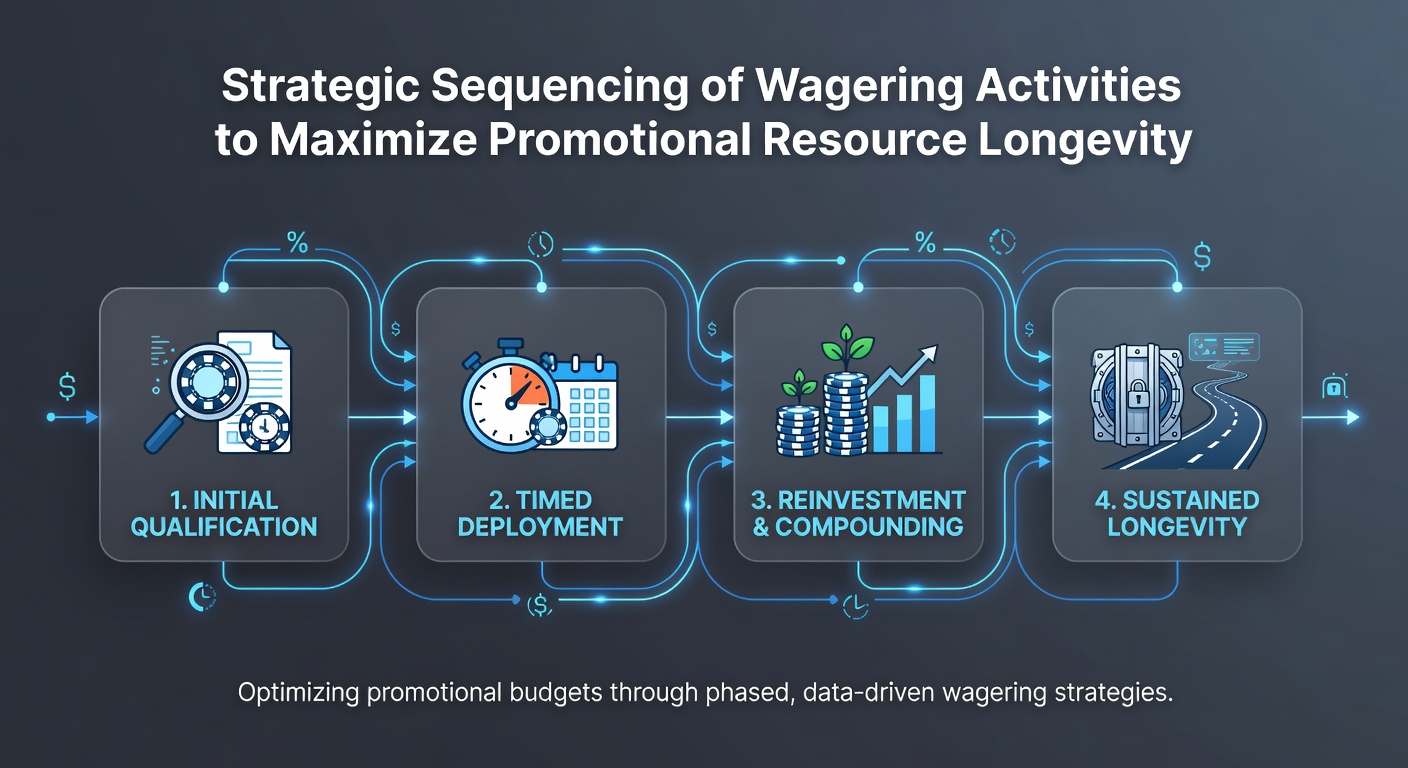
Strategic sequencing involves arranging different wagering activities in deliberate order so promotional credits, free spins, and bonus funds stretch across more sessions. Observers note that players who plan game selection and bet sizes according to volatility patterns and wagering requirements often complete playthrough conditions without depleting resources prematurely, and data from multiple jurisdictions confirms measurable differences in session duration when this approach is applied consistently.
Core Principles Behind Effective Sequencing
Research from academic gaming studies indicates that beginning with lower-volatility options such as certain video poker variants or even-money table games allows promotional balances to remain intact longer while satisfying initial contribution percentages toward requirements. Those who have examined player data across North American and European markets report that this initial phase reduces rapid drawdowns, which in turn preserves funds for higher-contribution games later in the sequence. The approach relies on matching game contribution rates published by operators with the specific terms attached to each promotional offer.
Figures compiled by the Nevada Gaming Control Board show steady growth in reported bonus-related play volumes through 2025 and into June 2026, with operators noting increased player retention when structured sequencing tools appear in mobile applications. These tools typically list eligible games by contribution percentage, enabling users to map an order that aligns with remaining wagering thresholds. Experts at industry conferences have presented case examples where sequenced play extended average bonus lifespan by 18 to 27 percent compared with unstructured approaches.
Practical Application Across Game Categories
Players frequently start sequences with games that contribute fully or at high rates to wagering requirements while maintaining modest bet sizes relative to current balance. Once a set percentage of requirements is cleared, the sequence shifts toward games offering higher potential returns per wagered unit, such as select progressive slots during promotional windows. This transition point is determined by remaining funds and time limits attached to the offer, and operators in regulated markets provide real-time tracking interfaces that display progress toward completion.
Industry reports from the Australian Communications and Media Authority document similar patterns among online participants, where sequenced movement between slot categories and live dealer tables correlates with higher completion rates for deposit-match promotions. The reports highlight that timing the switch after 40 to 60 percent of requirements are met tends to balance risk exposure while still meeting operator deadlines, and data visualizations in those documents illustrate session-length distributions under different ordering strategies.

Timing Considerations and Requirement Mapping
Mapping requirements ahead of play involves listing each game type's contribution weight alongside the total amount that must be wagered. Research published through university gaming centers demonstrates that visual mapping reduces errors in sequencing and helps participants avoid low-contribution games that would otherwise extend the required volume without advancing the goal. As of June 2026 several platforms have integrated requirement calculators that automatically reorder suggested sequences based on current balance and remaining time, and early adoption metrics indicate measurable uptake among frequent promotional users.
Additional layers of sequencing account for daily or weekly loss limits and self-imposed session caps that many regulated venues enforce. By placing higher-variance segments later in the order, participants who follow published guidelines can complete playthrough targets while staying within those protective boundaries, according to aggregated compliance data released by multiple state regulators.
Monitoring and Adjustment During Play
Real-time monitoring allows adjustments when actual results deviate from projected outcomes. Tracking interfaces display both wagered amounts and remaining promotional balance, enabling mid-sequence recalibration if early results exceed or fall short of expectations. Studies conducted by independent research groups show that players who pause to review progress at 25 and 50 percent completion points maintain longer overall resource longevity than those who proceed without interruption.
Regulatory updates scheduled for implementation in several jurisdictions during 2026 require clearer display of contribution percentages on game information screens, which further supports precise sequencing. These changes build on existing transparency standards already in place across multiple licensing authorities and aim to give participants better data for ordering decisions.
Conclusion
Sequencing wagering activities according to contribution rates, volatility profiles, and remaining promotional thresholds provides a structured method for extending the usable life of bonus resources. Data from regulatory bodies and academic sources confirm that deliberate ordering produces measurable differences in session duration and completion rates. As platforms continue refining tracking tools through June 2026 and beyond, participants gain additional support for applying these patterns consistently across different promotional structures and game portfolios.