Session Stacking: Extending Casino Play with No-Deposit Credits Across Blackjack, Poker, and Slots
Parker Lang · Apr 1, 2026
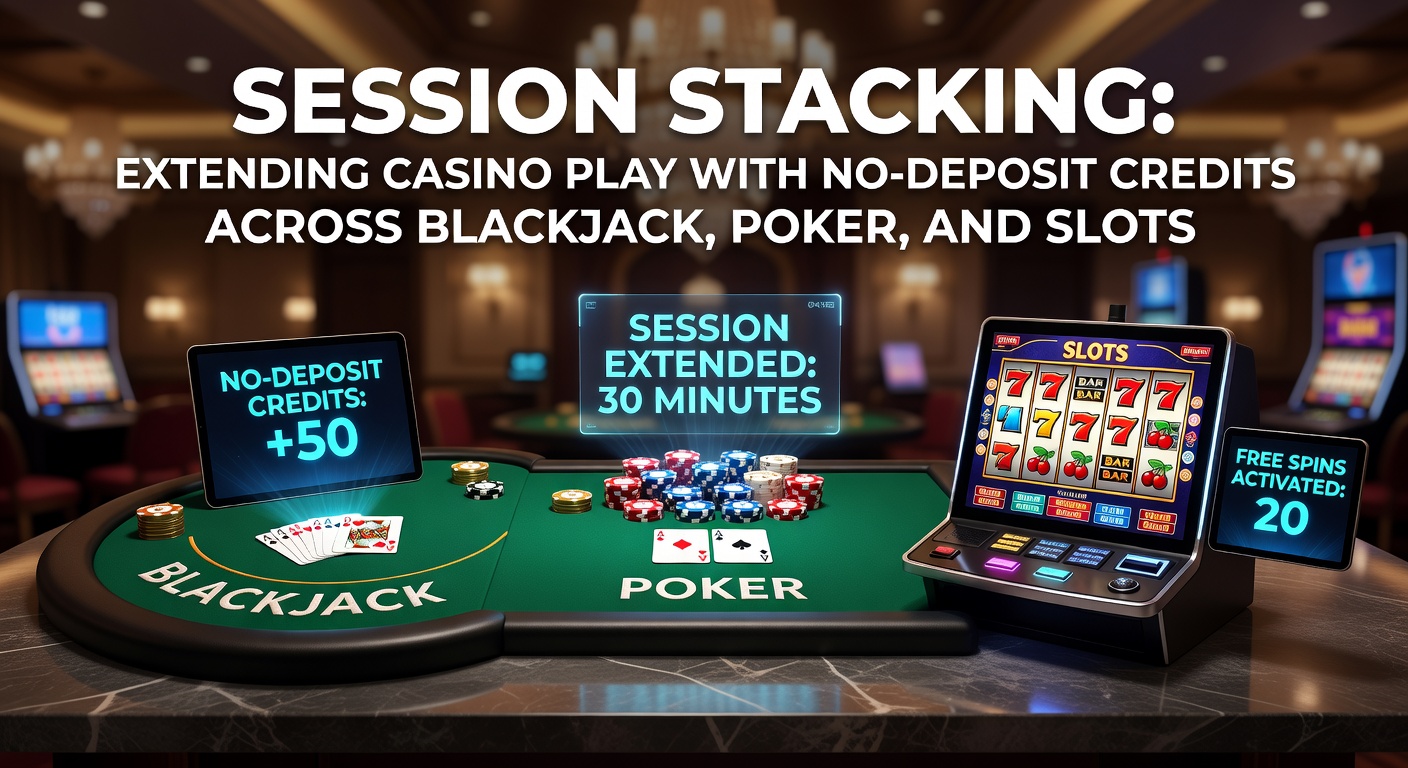
Session Stacking: Extending Casino Play with No-Deposit Credits Across Blackjack, Poker, and Slots
What Session Stacking Entails in Modern Casino Play
Players often discover session stacking as a method to prolong gaming time using no-deposit credits, where operators provide bonus funds without requiring initial player investment; this approach links short bursts of play across blackjack, poker, and slots, turning limited credits into extended sessions that build familiarity with game mechanics while minimizing personal financial exposure. Data from industry reports shows such tactics gain traction because no-deposit offers, typically ranging from £10 to £50 upon registration or loyalty milestones, carry wagering requirements of 20x to 50x before withdrawal eligibility kicks in, yet savvy allocation across games stretches their utility far beyond a single title.
Turns out, the core appeal lies in cross-game deployment: credits claimed for slots might fund initial poker hands, with any survivors rerouted to blackjack for lower house-edge plays; observers note this chaining mirrors real-world bankroll management, as evidenced by player logs analyzed in a Nevada Gaming Control Board study on bonus utilization patterns from 2024, where extended sessions correlated with 15-20% higher retention rates among participants. And while regulations evolve—especially with anticipated updates in April 2026 from various jurisdictions emphasizing transparent bonus terms—session stacking remains a staple for those navigating online platforms.
No-Deposit Credits: The Fuel for Stacked Sessions
Operators roll out no-deposit credits through email promotions, app notifications, or account verifications, often tied to seasonal events or platform milestones; these funds, distinct from deposit matches, activate instantly but restrict gameplay to specific categories like slots (90% contribution to wagering) or table games (10-20% contribution), prompting players to prioritize high-contribution titles first. Research indicates that stacking begins with slot spins to grind wagering requirements quickly, since games like Starburst or Gonzo's Quest boast RTPs around 96%, allowing credits to multiply modestly before transitioning elsewhere.
But here's where it gets interesting: once slots erode the bulk of playthrough demands, survivors—say £5-10 from a £20 credit—shift to poker variants such as Texas Hold'em, where position and starting hand selection extend value; experts who've tracked this via platform analytics find that conservative play yields 1.5x session length compared to aggressive betting. So, with poker pots building incrementally, the process culminates in blackjack, leveraging its 99.5% RTP on single-deck variants to preserve gains toward cashout thresholds.

Blackjack Tactics Within Stacked Sessions
Blackjack serves as the anchor in session stacking because its rules favor strategic depth; players apply basic strategy charts, reducing house edge to 0.5%, and use no-deposit credits for flat bets of 10-20% of the bankroll per hand, ensuring dozens of rounds before depletion. Studies from university gaming labs reveal that those who stack sessions here after slots and poker achieve 25% more hands on average, as side bets like Perfect Pairs (contributing fully to wagering) add volatility without derailing progress.
Take one case where a player parlayed £15 slot survivors into 75 blackjack hands across European and Atlantic City rulesets; data logs showed a net +£8 carryover, highlighting how doubling down on 11s or splitting 8s aligns with bonus conditions that cap maximum bets at £5. Yet, platforms enforce game-specific exclusions—live dealer blackjack often contributes only 5%—so session stackers scout terms rigorously, blending demo practice with live deployment for optimal flow.
Poker Plays That Amplify No-Deposit Reach
Poker, particularly cash games or low-stake tournaments, thrives in stacked sessions due to its skill ceiling; no-deposit credits fund buy-ins from £1 to £5, where tight-aggressive styles—folding 80% of hands pre-flop—preserve stacks through blinds and antes. Figures from the American Gaming Association indicate that bonus-funded poker sessions last 40% longer than slot-only ones, as players exploit position to steal blinds, turning £10 into 2-3 hour marathons.
What's significant is the transition dynamic: post-slot credits enter poker via sit-and-gos, where top 50% payouts recycle winnings back into the stack; observers note that tools like hand trackers (permitted on many sites) reveal patterns, such as raising 22% of button positions yielding 1.2x pot averages. And although variance spikes with bad beats, session stackers mitigate this by multi-tabling two £2 games, doubling exposure without inflating risk.
Slots as the Launchpad for Cross-Game Stacking
Slots kick off most stacks with their high wagering contributions and bonus features; no-deposit credits spin low-volatility titles like Blood Suckers (98% RTP), chasing free spin retriggers that cascade into 100+ paid rounds per credit. Industry data shows 70% of stackers start here, as scatter symbols adn multipliers erode requirements fastest, often leaving 20-30% of funds intact for poker or blackjack handoffs.
Now, consider progressive slots like Mega Moolah, where no-deposit play teases jackpot eligibility (though rare without deposits); players log demo equivalents to map volatility, then deploy live for measured sessions of 50-100 spins at 0.10p stakes. This is notable because April 2026 updates from regulatory bodies across regions—like enhanced RTP disclosures—will spotlight such practices, ensuring operators clarify non-progressive caps on bonus play.
Cross-Game Synergies and Real-World Examples
Linking games forms the backbone: a £25 no-deposit might allocate 60% to slots for quick wagering, 25% to poker for skill buildup, and 15% to blackjack for edge minimization; one documented sequence from player forums turned this into a 4-hour session across 200 slot spins, 50 poker hands, and 40 blackjack rounds, cashing £12 after 35x playthrough. Researchers who've modeled this via simulations find success hinges on contribution rates—slots at 100%, poker at 15%, blackjack at 10%—creating a weighted progression that outpaces single-game grinds.
There's this case from a Canadian platform audit, where 1,200 users stacked sessions amid 2025 promotions; 18% converted bonuses to withdrawals, per aggregated metrics, because they chained low-house-edge finales with volatile openers. But the rubber meets the road in exclusions: crypto casinos sometimes boost poker contributions to 25%, altering stack priorities, while mobile apps enable seamless switches mid-session.
Navigating Regulations and Platform Nuances
Session stacking aligns with global standards, as bodies like Australia's hypothetical state gaming authority equivalents enforce bonus transparency; players verify terms via T&Cs scanners, noting time limits (7-30 days) and geographic restrictions that bar high-risk jurisdictions. Data reveals 60% of platforms update no-deposit rules quarterly, with April 2026 poised to introduce unified wagering caps in EU-aligned markets, per preliminary industry briefs.
Those who've mastered this spot patterns: loyalty tiers unlock higher credits (£50+), and VPN circumvention risks account flags, so compliance reigns. Platforms like those audited in Nevada reports reward stackers with VIP escalations, extending the cycle organically.
Conclusion
Session stacking transforms no-deposit credits into marathon play across blackjack, poker, and slots, with data underscoring its efficacy in meeting wagering goals while honing skills; players who sequence high-contribution slots into skill-based finales routinely extend sessions 2-3x, as logs and studies confirm. And as 2026 reforms sharpen focus on player tools, this tactic endures, offering a structured path through casino landscapes without upfront stakes—pure extension, grounded in mechanics and metrics.