Synchronizing Progressive Accumulator Growth With Bonus Credit Availability During Multi-Table Position Adjustments
Jakob Schwarz · Aug 26, 2026
Synchronizing Progressive Accumulator Growth With Bonus Credit Availability During Multi-Table Position Adjustments
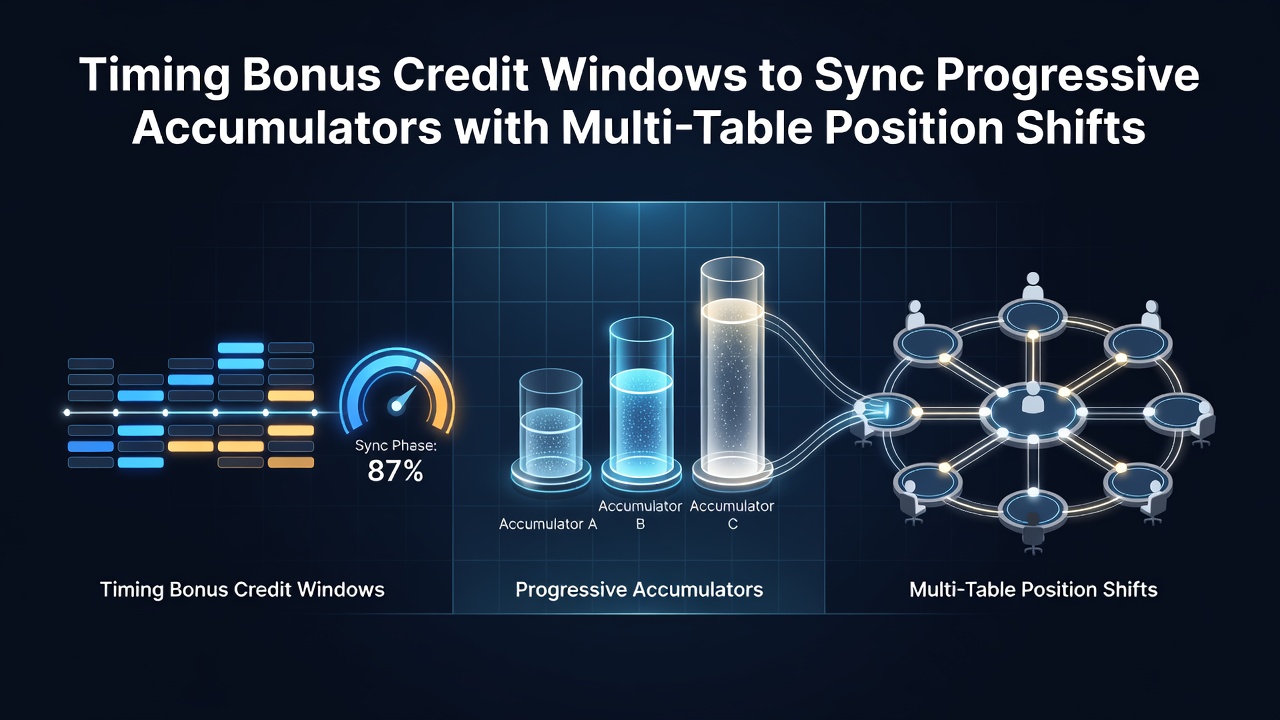
Online casino platforms manage progressive accumulator pools through centralized systems that track contributions from linked machines or games, while bonus credit windows operate on separate timers tied to player accounts and promotional campaigns. Observers note that these two mechanisms run on independent schedules, yet certain alignments occur when bonus activation periods coincide with peak contribution phases in the accumulators.
Research from the Nevada Gaming Control Board indicates that progressive systems update contribution percentages in real time, with meters reflecting each bet placed across participating titles. Bonus credits, by contrast, activate during defined intervals that operators publish in advance through account notifications and lobby displays. Those who monitor both timelines report that coordination becomes possible when a player shifts between tables in poker or switches between slot banks, because position changes often trigger new session data that the platform logs against active promotions.
Mechanics of Accumulator Updates and Credit Windows
Progressive accumulators collect a small percentage from every qualifying wager, and the rate of growth accelerates during high-volume periods such as evening hours or promotional events. Data from industry reports show that meters can increase by several thousand units within a single hour when thousands of players contribute simultaneously. Bonus credit windows function differently: they open for fixed durations, typically ranging from fifteen minutes to several hours, and any unused portion expires at the close of the window.
Multi-table position shifts introduce additional variables because each table maintains its own seat order and betting rotation. When a player moves from one table to another, the platform registers the change as a new session segment, which can reset certain tracking counters used for bonus eligibility. Experts have observed that these resets sometimes align with the start of a fresh bonus window, allowing the player to apply credits while the accumulator continues to receive contributions from the broader player base.
Timing Patterns Across Gaming Formats
Studies conducted by the Australian Gambling Research Centre found that slot progressives and table-game promotions display distinct peak windows, often separated by several hours. Slot accumulators tend to climb fastest between 8 p.m. and midnight in major time zones, whereas poker bonus credits frequently activate during afternoon blocks when traffic is lighter. Players who transition between formats during these overlapping periods can apply credits to one game while the other continues to build its meter.
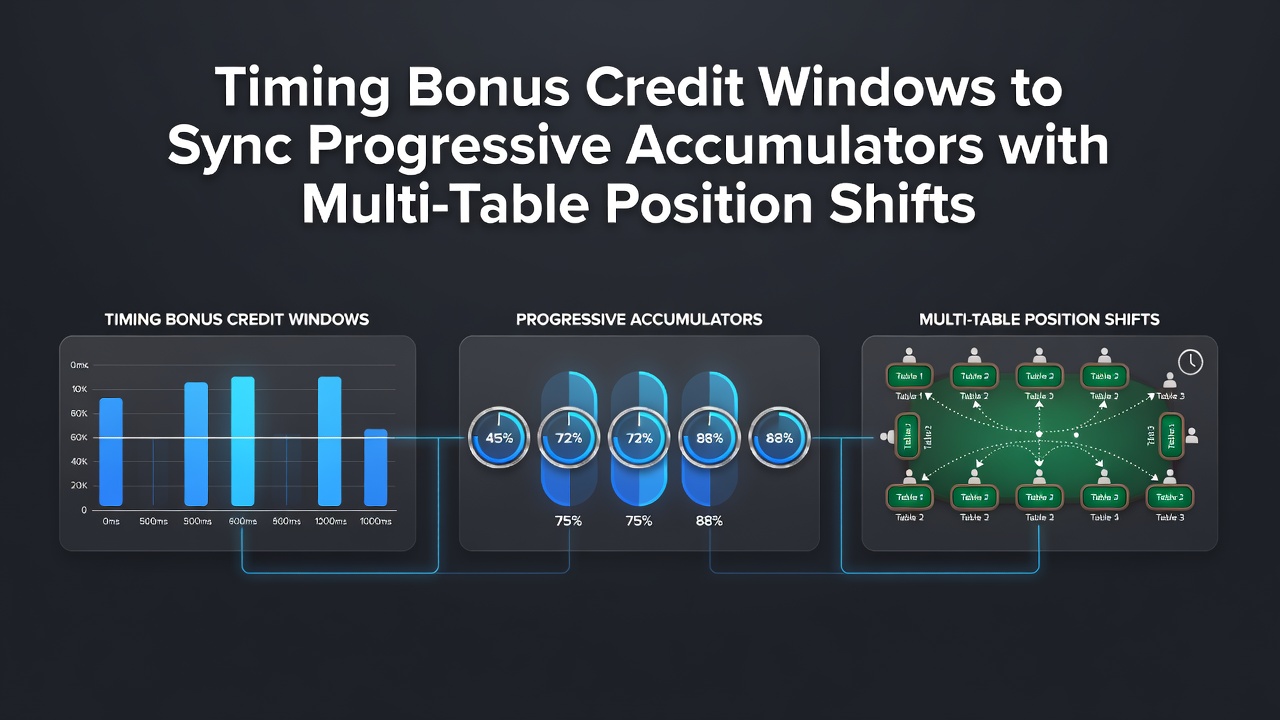
Position adjustments in multi-table poker add another layer because seat changes alter the order of action and can influence the timing of antes or blinds. Platform logs record each relocation, and some systems apply a brief reconciliation period during which bonus eligibility is rechecked. This reconciliation moment occasionally coincides with the opening of a new credit window, creating a narrow interval where both accumulator growth and bonus application remain active.
Regulatory Context in August 2026
By August 2026 several jurisdictions had introduced updated reporting requirements for operators regarding the disclosure of bonus expiration rules and progressive contribution rates. The British Columbia Lottery Corporation published revised guidelines requiring clearer display of window durations and meter update frequencies. Similar measures appeared in other regions, emphasizing transparency so that account holders receive advance notice of when credits become usable and when meters last received contributions.
These regulatory updates did not alter the underlying technical separation between bonus timers and accumulator engines, yet they increased the volume of publicly available data on both systems. Industry associations such as the European Gaming and Betting Association compiled summaries showing that operators now publish average window lengths and contribution percentages in standardized formats, allowing observers to identify recurring alignment patterns without accessing restricted backend information.
Practical Considerations for Session Management
Account dashboards typically list active bonus windows alongside current progressive meter values, though the two figures update on different cycles. When a player initiates a table change, the interface refreshes to reflect new seating and may simultaneously display any newly available credits. Those who track these refreshes note that the interval between the table-change confirmation and the bonus display can range from a few seconds to nearly a minute, depending on server load.
Operators maintain separate ledgers for promotional credits and real-money wagers that feed progressives, which prevents direct conversion between the two. However, the sequence in which a player applies credits and places wagers can influence which contributions register first on the accumulator meter. Reports from academic reviews of gaming systems confirm that order of operations remains fixed by platform architecture rather than by player preference.
Conclusion
Timing elements in bonus credit windows and progressive accumulators operate according to fixed platform rules that remain consistent across sessions, while multi-table position shifts introduce brief reconciliation points that sometimes overlap with credit availability. Regulatory bodies in multiple regions have increased disclosure requirements around these mechanics by August 2026, providing more data for analysis without changing the technical separation between the systems. Observers continue to document alignment patterns through publicly released information from sources such as the Nevada Gaming Control Board and the Australian Gambling Research Centre, confirming that synchronization depends on the interaction of published schedules rather than on any single controllable variable.